Interview: Pilot Project in Lima Opens New Market Opportunities for German Water Technologies
In one of the world’s driest metropolitan regions, the EXI project NEWA-LIMA successfully demonstrated managed aquifer recharge using treated wastewater. At the same time, the project fostered international partnerships and created new market opportunities for German green technology companies.
The global demand for sustainable water supply solutions continues to grow. Innovative approaches to water reuse and groundwater protection are gaining increasing attention, particularly in water-scarce regions. In this interview, Katharina Fesch discusses the project’s outcomes in Lima and the opportunities for German environmental technologies in international markets.
About Katharina Fesch
Katharina Fesch is a Research Associate at TZW: DVGW-Technologiezentrum Wasser (Water Technology Centre). As part of the Water Supply Department, she works on drinking water treatment and advises water utilities on process engineering issues. Within the EXI projects NEWA-LIMA and NEWA2, she is responsible for the managed aquifer recharge component.
Ms. Fesch, what challenge did your project aim to address, and what economic potential did you identify?
Lima is one of the driest metropolitan areas in the world. As a result, providing a reliable water supply for its approximately ten million residents and its industrial sector presents major challenges. Local rivers carry significant flows only during the rainy season in the Andes. At the same time, groundwater ressources have been overexploited for many years, while treated wastewater has hardly been reused.
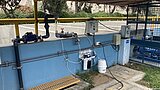
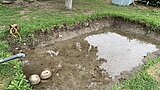
Through the NEWA-LIMA project, we sought to demonstrate how treated water can be intentionally infiltrated into the subsurface to stabilize groundwater reserves over the long term. This form of managed aquifer recharge (MAR) is already well established in Germany. Together with a local partner, we tested the technology under Lima’s specific conditions at pilot scale. In the long term, this creates market opportunities for companies operating in the drinking water and wastewater sectors.
What new opportunities has the project created for your organization?
Above all, the project enabled us to establish new international partnerships. Together with our Peruvian project partner SEDAPAL, we developed a strong relationship based on trust and exchanged expertise on water supply challenges and solutions. At the same time, we strengthened our collaboration with researchers at the University of Stuttgart and established new contacts with universities in Lima.
In addition, we initiated cooperation with key international development organizations, including the World Bank, the Deutsche Gesellschaft für Internationale Zusammenarbeit (GIZ), and KfW Development Bank. We are particularly pleased that the World Bank has incorporated the project’s managed aquifer recharge concept using treated wastewater into a broader circular economy initiative within Peru’s water sector. Furthermore, our engagement with KfW, combined with our collaboration with SEDAPAL, led to a contract for a drinking water treatment study in Lima, which we have carried out over the past several months.
What role did the Export Initiative Environmental Protection play?
The Export Initiative Environmental Protection made the project possible through its financial support. We also benefited significantly from exchanges with other funded projects. The EXI Annual Conference was especially valuable, providing opportunities to establish new contacts and explore ideas for future collaboration. Several of these connections have since become important for our current follow-up project, NEWA2. Building on the experience gained through NEWA-LIMA, NEWA2 further develops and expands the approaches tested in Lima for sustainable water reuse and managed aquifer recharge. Our goal is to make a lasting contribution to safeguarding Lima’s water resources.
Where do you see future international deployment and market opportunities for your solution?
Our pilot plant demonstrated that managed aquifer recharge can make a significant contribution to Lima’s water supply. The technology has substantial global potential, particularly in arid and semi-arid regions. Many locations along the west coast of South America face similar conditions and could benefit from the insights gained through the project. At the same time, climate change and increasingly frequent droughts are intensifying water-related challenges worldwide. Demand for solutions that protect and replenish groundwater resources is therefore expected to grow in the coming years.
Which experiences from the project proved particularly valuable?
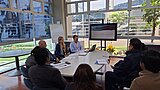
One of the most valuable aspects of the project was the close involvement of local stakeholders. Together with our colleagues from the University of Stuttgart, we conducted a series of workshops on site and engaged representatives from government agencies, water utilities, academia, and civil society at an early stage. This approach allowed questions and potential concerns to be addressed openly and enabled stakeholders to develop solutions collaboratively. The project demonstrated how essential early dialogue is for securing public acceptance and ensuring the successful implementation of innovative measures. In our view, this stakeholder engagement process is a critical success factor for scaling up groundwater recharge projects in the future.
Project pictures